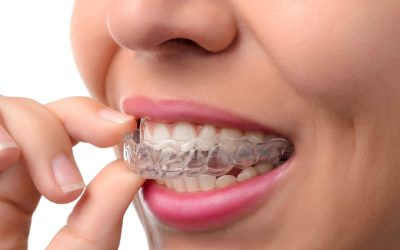
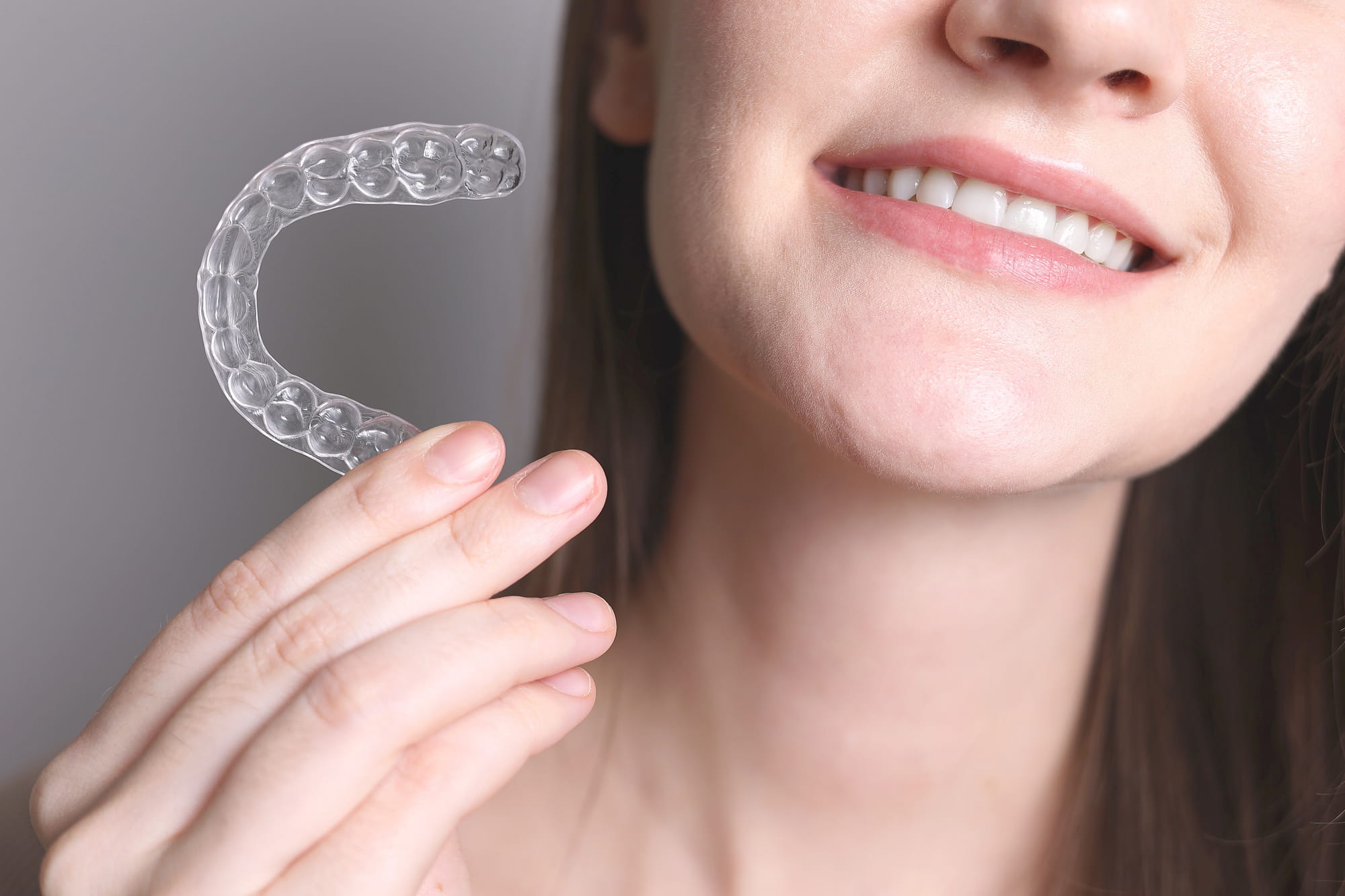
Invisalign has revolutionized the world of orthodontics by introducing a clear, discreet way of fixing teeth that is free from the use of braces.
However, many patients still get surprised when their orthodontist brings up the topic of something called Invisalign attachments. These tiny bumps on the teeth may appear insignificant at first, but are actually useful in making the treatment more effective.
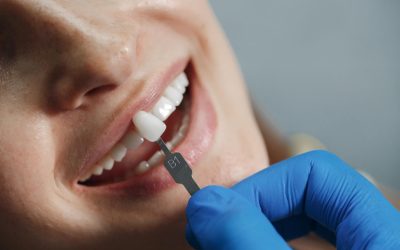
In short, they are small, tooth-colored bumps bonded on top of the teeth with the sole aim of assisting Invisalign better. They are basically needed when the teeth need to rotate or move vertically.
Invisalign Attachments
Invisalign attachments are small, tooth-colored shapes that will bond to certain teeth during the course of treatment.
Their use is very straightforward – giving the aligners something to grasp.
When there are no attachments, aligners can move from one tooth to another but may have difficulty in carrying out complex motions. Attachments help in gripping the tooth, making it possible for the tooth to move in the right direction and at the right rate.
They are made of the same reliable, harmless material as dental fillings and blend very naturally with the teeth because of this, and are also removable without damaging the tooth surface even after the treatment is over.
When Are Invisalign Attachments Needed?
Not everyone who chooses Invisalign will need attachments. In simpler cases, where teeth only need minor adjustments, they may not be required at all.
Invisalign attachments are more commonly used when treatment involves:
- Rotating teeth that are twisted.
- Moving teeth up or down.
- Closing noticeable gaps.
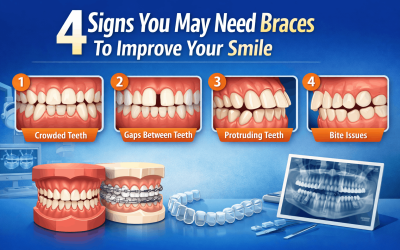
- Correcting crowding or bite issues.
Your orthodontist decides this during the digital treatment planning stage, based on how your teeth need to move.
How Do Invisalign Attachments Work?
Invisalign aligners function through the use of gentle constant pressure on your teeth. But some tooth movements are more difficult than others.
In this case Invisalign attachments act like small handles. They allow the aligners to apply force more precisely, helping teeth move rather than tip or shift unevenly.
This leads to:
- Better control.
- More predictable results.
- Fewer delays in treatment.
Orthodontists use Invisalign attachments as part of digitally planned treatment to ensure teeth move exactly as predicted in the treatment simulation.
In many cases, these attachments help shorten overall treatment time.
Optimized vs Conventional Attachments
| Aspect | Optimized Attachments | Conventional Attachments |
| Selection | Auto-calculated by software. | Manually chosen by the doctor. |
| Shape | Complex, custom geometries. | Standard (Rectangle, Oval). |
| Function | Active “force vector” for specific movement. | Passive “handle” for grip/retention. |
| Flexibility | Low (tied to software algorithms). | High (can be resized/moved). |
| Best For | Complex rotations and root torquing. | General anchoring and simple tilts. |
Both types are effective. The choice depends on your treatment plan and the movements required.
Are Invisalign Attachments Painful?
There is no pain caused by the attachments.
Nonetheless, there might be some amount of pressure or discomfort for a couple of days, particularly whenever attachments are added or whenever a new set of aligners is worn.
This discomfort is temporary and usually manageable with:
- Soft foods for the first day or two.
- Over-the-counter pain relief, if recommended.
- Wearing aligners consistently as instructed.
Most patients adjust quickly.
Durability and Common Issues
Invisalign attachments are designed to stay in place, but can occasionally come off. This can happen due to:
- Chewing very hard foods.
- Teeth grinding or jaw clenching.
- Removing aligners too forcefully.
If an attachment falls off, it’s important to contact the orthodontist. Replacing it early helps prevent treatment delays.
Invisalign Attachments: Before and After
The impact of Invisalign attachments can be best observed during the initial treatment process. As the teeth begin to straighten, many patients find that they become less noticeable and easier to overlook in everyday life.
One must remember that each and every smile is distinct in its own way. This depends on the teeth that you have, the intended purpose of treatment, as well as the desired fit of the Invisalign aligners.
Cleaning and Caring
To keep the attachments clean, one should:
- Brush after meals whenever possible.
- Floss daily.
- Limit foods and drinks that stain the teeth.
- Maintain good oral hygiene.
Attachments can stain if oral hygiene is poor, but regular brushing helps them look discreet.
How Are Invisalign Attachments Removed?
Invisalign attachments are removed by an orthodontist either after the treatment or when they are no longer required. This is a simple process that is carried out with care to avoid causing any damage to the teeth.
The orthodontist will remove each attachment very carefully, and then polishes the tooth surface to be smooth again. No drilling, no injections, and no damage to the enamel occurs. Most patients describe this feeling not as pain, but more likely as slight pressure or a light vibration.
After removal, the teeth may feel unusually smooth at first, which is completely normal and temporary. Once the attachments are off, the teeth are clean, and comfortable, ready for retainers or the next stage of treatment.
Invisalign Attachments vs Buttons – What’s the Difference?
They may appear to be quite similar at first glance, but their applications in orthodontic treatment are vastly different.
Invisalign attachments are small, tooth-colored bumps bonded to the teeth to help aligners grip better.
They are essentially meant for assisting Invisalign-induced tooth movements, especially when those movements are rotational, or alignment-related.
They do not work independently; they function as part of the Invisalign system itself.
Invisalign buttons are small, metal or tooth-colored anchors bonded to the teeth to offer a fixed point to attach the elastic in orthodontics.
They are basically used for correcting bite issues, most commonly overbites, underbites, crossbites, or misalignment with their jaws. The elastics attached to the buttons exert pressure on the upper and the lower teeth to guide the bite into a healthier position.
They actively work with elastics rather than the aligners.
Cost and Added Expenses
Invisalign attachments generally don’t have a separate, itemized cost. They are included in the overall treatment cost.
In Canada, Invisalign treatment cost typically ranges from $3000 to $8,000. Mild cases range from $2,000 to $4,000 while complex cases can exceed $7,500.
Extra charges are uncommon and usually only apply if attachments need repeated replacement.
Do Invisalign Attachments Really Matter?
Yes, they are absolutely important!
Despite their small appearance or the fact that they may easily be missed or overlooked, the role that attachments play with regard to the efficiency of the workings of Invisalign should not be underestimated. They assist in ensuring that a good grip between the aligners and teeth is maintained, which facilitates the application of the necessary forces for these actions.
The absence of this component could lead to slower and possibly incomplete actions for some teeth movements.
They improve accuracy and reduce delays in treatment for many patients. They often make the difference between Invisalign being a cosmetic device and an effective orthodontic treatment.
Key Takeaways
- Invisalign attachments help aligners apply precise force to teeth.
- They are often required for complex tooth movements.
- They are temporary, safe, and removed after treatment.
- Most patients adjust quickly with minimal discomfort.
FAQs
How long do Invisalign attachments last?
Invisalign attachments normally need to be worn throughout the duration of your Invisalign treatment. The duration can last anywhere from 6 to 18 months, depending on how complex your teeth movements are. They are placed early in treatment and removed by your orthodontist once all planned movements are complete.
Do Invisalign attachments hurt?
They are generally painless, although some discomfort or a certain amount of pressure may be experienced for a few days after placement or a switch to a different set of Invisalign aligners.
While the attachments on the aligners are smooth and made of a similar color to your teeth, your mouth may take a short while to get used to them.
Are Invisalign attachments noticeable?
No, they are not. Since Invisalign attachments are designed to be discreet and are made from tooth-colored composite material, they blend in with your natural teeth.
While they may be slightly noticeable up close, especially on front teeth, they are far less visible than traditional braces and are generally not noticeable during normal conversation or smiling.
Are Invisalign attachments necessary?
Invisalign attachments can be required when it comes to carefully controlled movements of teeth. They can increase the efficiency of aligners as they will be better positioned for rotations, vertical movements, or even corrections.
Though these are not a requirement for every single patient undergoing treatments, these are some common devices involved in a treatment plan on which Invisalign is based as a way to ensure its effectiveness.
Can you eat with Invisalign attachments?
Yes, you can eat normally with Invisalign attachments as they do not prevent you from eating. This is because they are firmly bonded to your teeth and are designed to handle everyday chewing.
But it is important that you remove the Invisalign aligners prior to having any meal as this helps prevent food from getting trapped around the attachments and keeps both your teeth and aligners clean and healthy.
What’s the difference between optimized and conventional Invisalign attachments?
Optimized attachments are designed automatically by Invisalign’s software for specific tooth movements. Their shape, size, and placement are calculated to deliver precise forces, making tooth movement more predictable and efficient.
Conventional attachments are selected and placed manually by the orthodontist. They use more standard shapes and offer greater flexibility when customized control is needed beyond what the software plans.
In many treatments, orthodontists use a combination of both, depending on the complexity of the case.