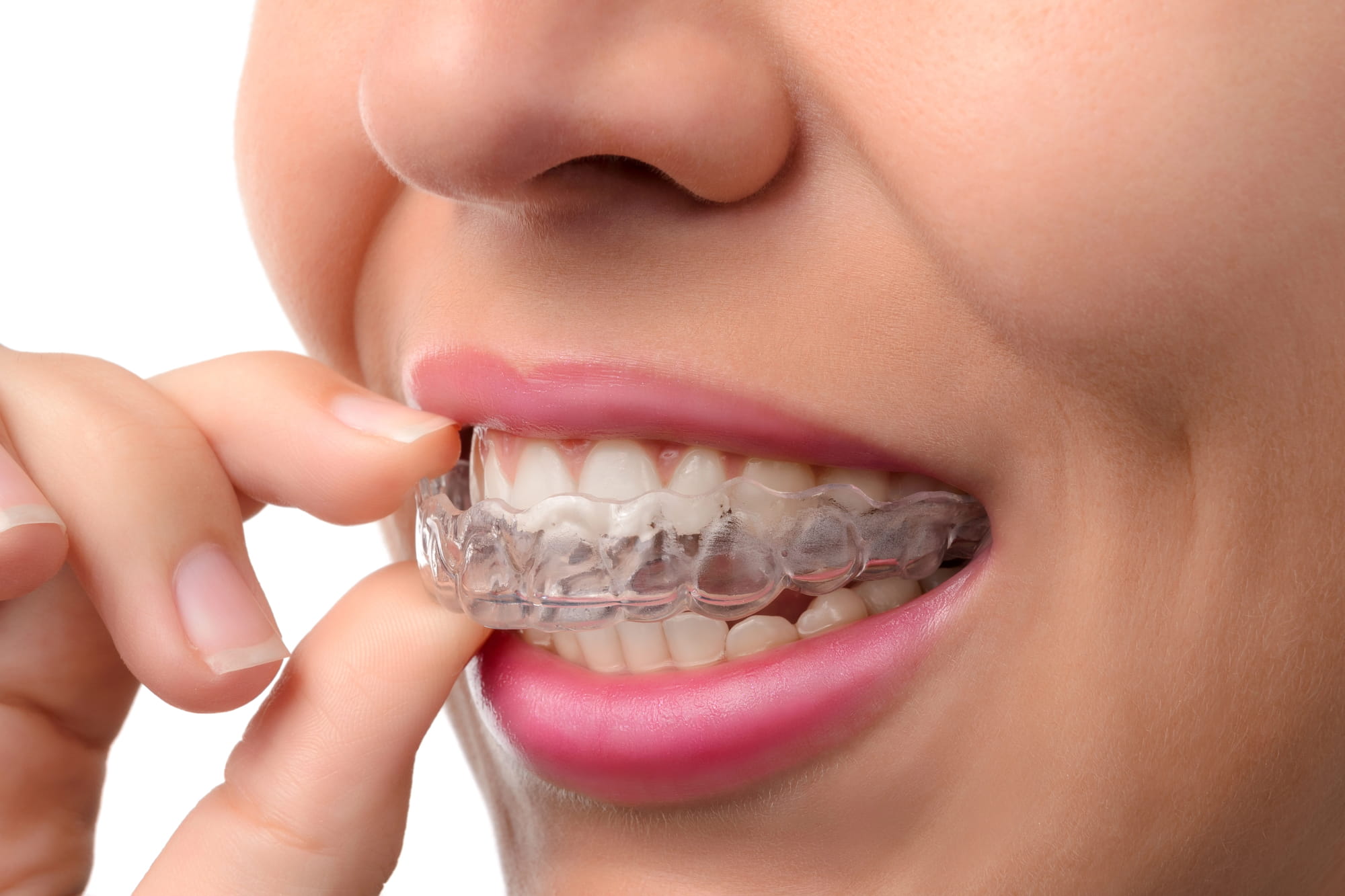
Invisalign treatment is designed to deliver predictable, precise tooth movement using a series of custom-made aligners. However, not every case progresses exactly as planned. This is where Invisalign Refinements come into play. These additional aligners help fine-tune results and ensure your final smile matches the original treatment goals.
What Are Invisalign Refinements?
When it comes to Invisalign refinement, these consist of additional aligners, which are ordered after the completion of your original set. This will happen in cases where teeth have not shifted in accordance with your original plan, or where further modifications need to be made for perfect alignment.
Teeth may behave in unexpected ways despite all digital predictions for various reasons. Refinements are not a setback. They are a standard part of various treatments.
Why Do Some Patients Need Refinements?
There is no one specific cause for refinements needed in Invisalign cases. Rather, they are often due to a combination of many different factors. These include:
- Biological Variability
- Compliance Issues
- Complex Movements
- Tracking Loss
1. Biological Variability
The process of teeth movement depends on bone remodelling, which may differ from one individual to another due to factors such as the level of bone density. Assuming that everything else is constant, sometimes even force may affect some patients differently, resulting in variations in the result. This is why Invisalign refinements are necessary.
2. Compliance Issues
Invisalign treatment requires full cooperation from the patient. Invisalign aligners must be worn constantly every day to ensure that teeth move constantly. Failure to adhere to the wearing schedule of Invisalign aligners may cause the teeth not to move, leading to the need for Invisalign refinements.
3. Complex Movements
There are also specific types of orthodontic movements that cannot be reliably predicted using transparent aligners. These include rotations of rounded teeth (like canines), vertical movements such as extrusion or intrusion, and comprehensive bite adjustments. Such movements often require iterative force application and fine calibration, which may not fully resolve within the initial aligner series, thereby necessitating a refinement phase.
4. Tracking Loss
“Tracking” refers to how closely the aligners fit and guide teeth according to the planned stages. When the fit is loose for reasons such as neglecting the use period, faulty attachment, or tooth resistance, the plan’s effectiveness is compromised. The discrepancy between the tray and the actual positioning of teeth accumulates over time, making it necessary to scan and adjust the aligners.
The Invisalign Refinement Process: Step by Step
The Invisalign refinement procedure is not just a simple adjustment. It is rather a continued treatment approach that uses new clinical data, advanced planning techniques, and applied forces to eliminate any existing issues following the placement of the first aligner tray.
Step 1: Clinical evaluation
This will help your dentist find any misalignment issues in your mouth to see whether you need any Invisalign refinements.
Step 2: Digital rescan
A new scan captures the current position of your teeth, reflecting actual treatment progress.
Step 3: Treatment plan revision
A focused plan is created to correct remaining issues and improve predictability for the refinements.
Step 4: Aligner Fabrication
New, targeted aligners are produced to fine-tune tooth positioning.
Step 5: Refinement phase begins
You wear the new aligners as prescribed, maintaining strict compliance.
Step 6: Progress monitoring
Regular check-ups ensure proper fit and accurate tooth movement.
Step 7: Final evaluation and retention
Checkups will follow until results are confirmed and retainers fitted.
Overall, the procedure does not settle for good enough. Rather, it seeks to bridge the difference between expectation and reality to ensure that Invisalign Refinements achieve clinical perfection.
How Long Do Refinements Take With Invisalign?
The honest answer to this depends on how much additional movement is required. Minor refinements may involve 5 to 10 trays. These usually take about 2 to 5 months. In contrast, more advanced treatments may involve the use of 20 or more trays, adding six to twelve months to the process.
It should be remembered that certain patients will undergo not just one but two rounds of refinements. Such a situation occurs most frequently when a considerable bite correction or work on several elements of the smile at once is needed.
Ultimately, the most precise estimate can only come from your orthodontist. This is based on your progress scan.
Invisalign Overcorrection vs Refinement: What’s the Difference?
Some patients may encounter two terminologies that can seem confusing: Invisalign overcorrection and Invisalign refinement. It is to be noted that both are interconnected yet separate concepts.
| Aspect | Invisalign Overcorrection | Invisalign Refinement |
| Definition | Planned movement beyond the ideal position. | Additional aligners for correcting the remaining issues |
| Timing | Built into the initial treatment plan | Introduced after the initial aligners are completed |
| Purpose | Prevent relapse and improve stability | Fine-tune alignment and bite accuracy |
| Approach | Predictive and preventive | Corrective and outcome-based |
| Treatment Impact | Usually, it does not extend the timeline | May extend treatment depending on needs |
Both strategies can be part of a successful Invisalign journey. Understanding what is at play in your specific case helps you set realistic expectations for your timeline and outcome.
Invisalign Refinements Before and After: What to Expect
Reviewing before and after pictures of Invisalign refinements, the improvements are not always dramatic. The attention at this point will be on the details.
Refinements typically improve:
- Small spacing issues that remain between teeth
- Minor rotational inconsistencies
- Bite alignment and contact points
- Overall symmetry and finishing aesthetics
These adjustments are what elevate the final outcome from acceptable to highly refined, both functionally and visually.
How Much Do Invisalign Refinements Cost?
Cost becomes an issue in most cases. In most comprehensive Invisalign plans, refinements are included as part of the overall treatment fee.
However, it should be noted that there are variations with regard to the cost structure of each plan available. Additional fees may apply in cases where:
- The treatment was initially limited rather than comprehensive
- A significant number of extra aligners are required
- Treatment extends beyond the expected scope
Discussing this upfront with your provider ensures clarity and avoids unexpected costs.
Final Thoughts
Invisalign Refinements are part of any modern treatment using clear aligners. It is a process that helps to solve practical issues and make sure that the treatment is successful from both clinical and cosmetic perspectives.
They shouldn’t be considered a delay but rather an essential phase of the treatment when you ensure that the outcome is not only satisfactory but optimal.
FAQs
Are Invisalign refinements free?
In many comprehensive Invisalign plans, Invisalign Refinements are included in the overall treatment cost. However, this depends on the type of plan (comprehensive vs. limited) and the provider. Additional fees may apply if refinements exceed the original treatment scope.
Does everyone need Invisalign refinements?
No, not every patient requires refinements. However, they are quite common. Whether refinements are needed depends on factors like case complexity, biological response, and how consistently aligners are worn.
What percentage of Invisalign patients need refinements?
A significant proportion of patients, often estimated at around 70–80%, require some level of refinement. This reflects normal biological variation rather than treatment failure.
How many refinements can you get with Invisalign?
There is no fixed number. In comprehensive plans, multiple rounds of refinements may be allowed within a certain timeframe. The exact number depends on your provider and how much additional correction is needed.
What are refinement trays in Invisalign?
Refinement trays are additional aligners created after the initial series. They are designed to make small, precise adjustments to tooth position, helping complete the treatment and achieve optimal alignment.